

Accelerating Midsize Financial Institution Business Outcomes with AI Intelligence as a Service
Accelerating Midsize Financial Institution Business Outcomes with AI Intelligence as a Service
Many financial institutions have struggled to efficiently and consistently use AI technologies for strategic and operational purposes. To meet this need, the Aunalytics® Innovation Lab was established to provide deep insights to midsize financial services organizations lacking large AI budgets. This combination of powerful analytics and intelligence services with an experienced data science team allows organizations to gain access to an affordable alternative to HyperCloud-based AI solutions.

Cyber Insurance Continues to Skyrocket—Do You Have a Security Strategy in Place?
Cyber Insurance Continues to Skyrocket—Do You Have a Documentable Security Strategy in Place to Show You’re Prepared?
Cyber risk is a growing critical concern for organizations of all sizes and public entities globally, as we continue to rely on information technology and digital devices. But in the wake of steadily rising digital threats, cyber insurance is getting increasingly expensive—and difficult—for companies to procure.



Increasingly Difficult Security Requirements Complicate Cyber Insurance Renewal
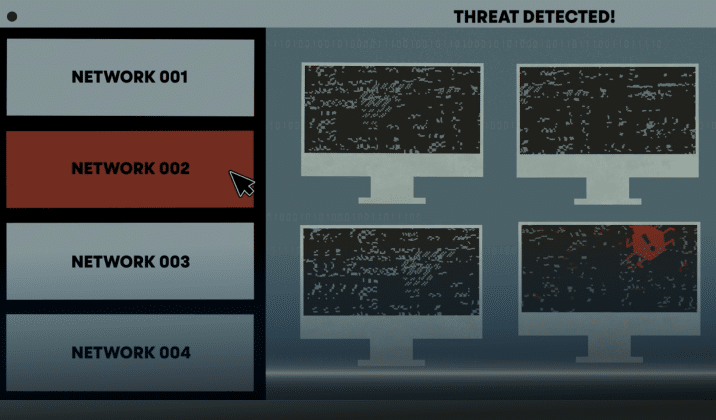
Have you received a cyber insurance renewal notice with a shocking sticker price? With an ever-increasing number of security incidents involving data breaches, ransomware, phishing scams and more, the cyber insurance landscape has changed. It’s no longer possible to get premium discounts for implementing certain security controls—more is now required. And, without enhanced security measures, you may not get cyber insurance at all.
Threats evolve over time, meaning your security posture needs to evolve in order to not only remain operational, but also be compliant to qualify for most insurance policies.
Insurance companies are now requiring more precautionary measures than ever before due to the constant—and costly—increase of threats. Premiums are increasing and coverage is being denied even for companies that have no history of breaches or claims—cyber insurance renewal rates have increased by up to 200% over the past two years, even for companies who have not made any claims.
The average cost of a data breach has raised from a massive $3.86 million in 2020 to a staggering $4.24 million in 2022.
The Solution

With the risks of operating in an increasingly digital world, cyber insurance is essential for your business to function and remain protected in the event of an attack. Aunalytics’ Advanced Security experts have the talent and technology to audit your security and discuss precautionary measures an insurance company may want you to take before renewal. With a dedicated team, your business can avoid costly data breaches, ransomware, and get your security up to snuff.
Are you ready to assess your security before your company is the victim of a bad actor, costing you upward $4.24 million dollars? See if an audit by our security experts makes sense, and whether your insurance company has outright dictated (or hinted by their renewal questionnaires) new precautionary measures that they expect your enterprise to adopt to obtain coverage.
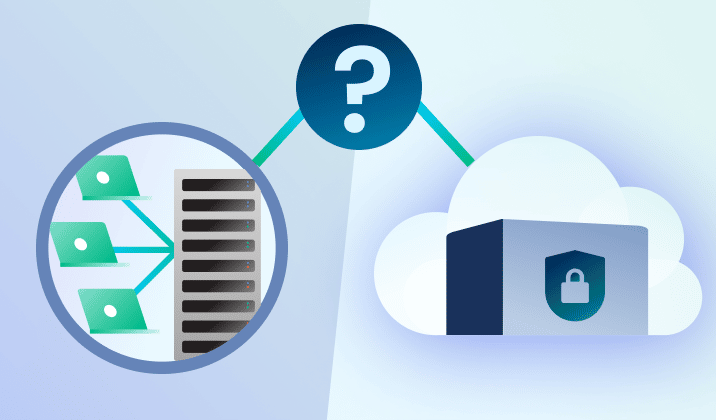
Cloud or On-Prem Servers—Which Is Better for Your Company?
Every organization needs to manage its data to get its desired business outcomes. For a company to access its data and use it in day-to-day operations, dashboards, reporting, and data analytics, it either needs a cloud or on-premises solution to facilitate compute, storage, and data management strategies.
What’s The Difference Between The Cloud And On-Premises Data Storage?
An on-premises data server is hardware that you maintain on your company’s premises for storing, processing, and accessing information through your organization’s networks. An in-house IT department is needed to maintain, turn over/replace, and upgrade the hardware, keep it stable and operational, and secure it.
A cloud storage solution run by an expert and backed by a cutting-edge data center provides the same functions as an on-premises server and more. It does not exist on your company’s premises and the data on it is accessed through the internet. All updates and maintenance tasks are performed by the cloud provider, who owns and operates its own hyper-secure data centers to safeguard your data in case of failure, cyberattack, or outage. Like on-premises servers, access to cloud data can be set by administrators to be permission-based to allow access only by authorized personnel.
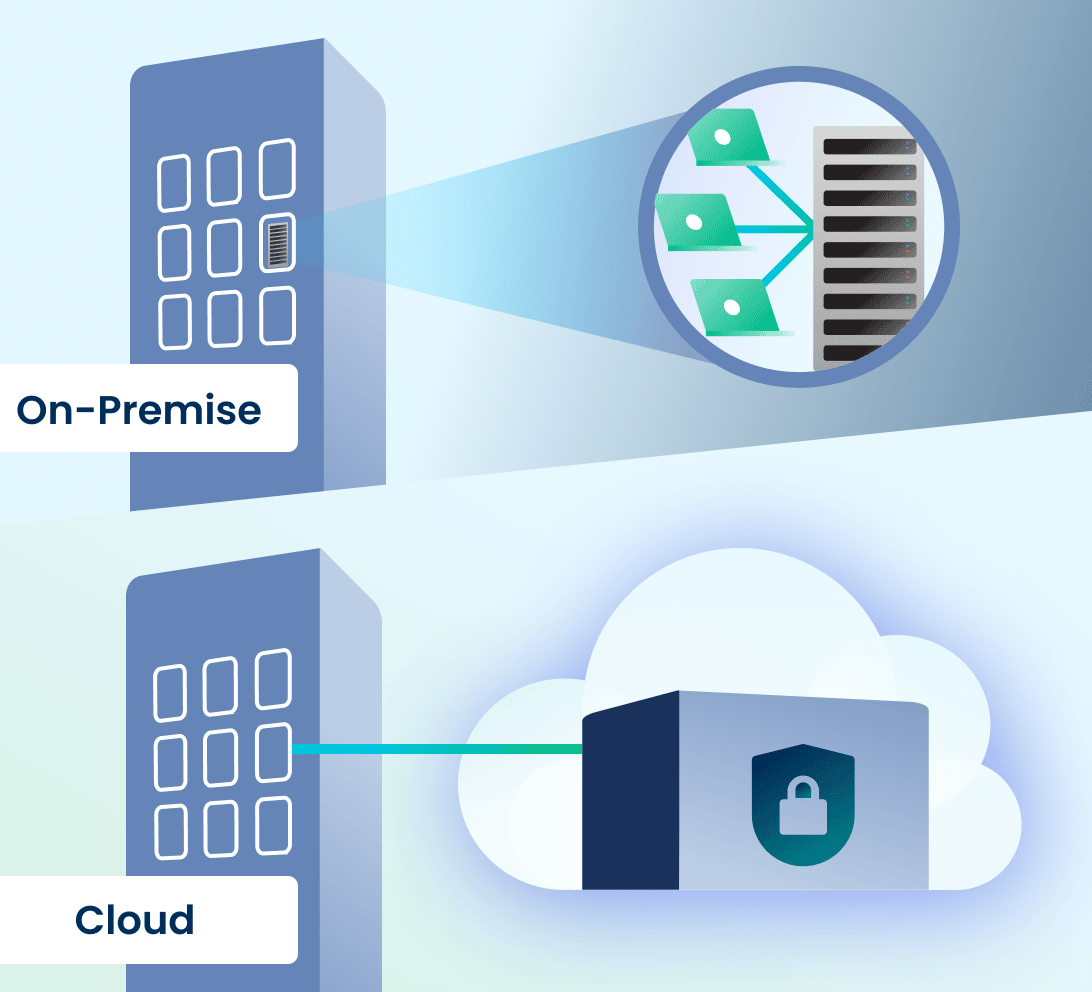
On-Premises vs. Cloud—Which Option Best Suits Modern Business Needs?
There are more factors when choosing between using a cloud computing solution or keeping servers on-premises, including customizability and scalability, security concerns, and the budget for your organization’s data management strategy. While on-premises data servers regularly require hardware upgrades in your physical locations to expand alongside your business’s growing needs, a cloud storage and computing solution with access to highly advanced data centers is scalable based upon your workload. Unlike an on-premises server that can take a lot of time and money to set up and ready for operation, cloud service providers ensure you can access your cloud for computing and storage needs almost instantly.
In some mid-sized companies, server rooms tend to be used for multiple purposes, which means that they are sometimes unlocked, unsecured, and allow for unauthorized access that compromises data security. Many mid-sized companies do not have 24/7/365 monitoring of their server rooms, specialized climate controls needed for a data center, and do not consistently deploy or regularly schedule hardware upgrades to keep the systems reliable before something goes down.
One mid-market employee shares the story of a server closet that her company had in a previous workplace. For starters, it could be accessed by nearly every employee of the company. She recounted that the IT department placed portable dehumidifiers in the room to keep moisture down. The IT department’s regular practice was to empty the server closet dehumidifiers in the office’s kitchen sink. Unfortunately, a new IT employee happened to trip while carrying one of the dehumidifiers and spilled water all over the server room. Every employee of the company was affected—they found out that the work they had done since the last backup, which happened to be 5 days ago, had disappeared. Even worse, their servers were down for several days after the incident, further impacting their daily business operations.
Although in the past, people feared that cloud would not be secure, or a company would lose control over its data—cloud has proven to be more secure than on-premises hardware. First, cloud vendors host their own data centers and because this is their main business, they have cutting-edge climate control environments to protect their clients’ data. Cloud vendors adhere to frequent hardware replacement turn-over schedules to keep uptime maximized and cloud operations state-of-the-art. Cloud vendors monitor their data centers 24/7/365, are security experts, and have strict controls in place in order to service clients in highly regulated industries with rigorous data security needs. For most mid-sized businesses, it is more cost effective to rely upon the expertise of a cloud vendor for data security and uptime than to host and maintain its own servers, stay on top of the latest security threats, and staff its data center (or data closet) for monitoring to prevent downtime and security breaches.
Large enterprises often can afford to build their own data centers providing them an alternative to an external cloud provider. However, this is incredibly expensive and can set organizations back by USD $10-25 million on yearly setup and operation costs. This infrastructure also takes a lot of time to be implemented and in today’s fast-paced business environment, this might not be entirely acceptable for decision-makers.
Yet, even for enterprises, on-premises solutions no longer make the most sense. Most modern business applications are cloud-native. Cutting-edge data analytics solutions are cloud-native and connect and integrate data sources using cloud technologies. Clouds are better suited for analytics than on-premises hardware, due to scalability and ability to absorb compute spikes (instead of having to invest in hardware with capacity for compute spikes as machine learning algorithms converge—which leads to excess capacity at other times).
According to Insights for Professionals, 63% of senior IT leaders and company executives who were surveyed expected to invest in cloud infrastructure-as-a-service in 2022. Considering the state of on-premises servers, which are becoming an obsolete technology that require an IT department to keep a constant eye on it, cloud technology is a natural progression in infrastructure for better data management. Gartner reports by 2025 almost 85% of companies will have moved to a cloud-first approach. Cloud technology has now evolved to a point where it provides better stability and security at a more economical price than on-premises solutions.
Mid-Market Company Considerations
Many organizations are operating in hybrid and multi-cloud environments. This means that they have some data in on-site servers, some data in cloud based line of business applications (relying on the application provider for data storage in whichever cloud the application vendor uses for its product), and many have some data in a public cloud.
However, mid-market companies have added considerations when choosing a cloud solution. Most public cloud service providers do not offer data management services. You need to do this yourself. Yet, mid-market companies often do not have this expert talent in-house. For success, mid-market companies need a cloud hyper-scaler that also provides data engineering services to build data connectors and pipelines, warehouses, data lakes, and the like. This skill set is different from a typical IT employee. Hyper-scalers—who can help organizations with data management, transform data from disparate sources into a decision and analytics-ready status, and bring transactional data into the forefront using a cost-effective cloud solution—tend to be private cloud vendors. For this reason, private cloud solutions make more sense than public cloud for mid-sized organizations.

A side-by-side partnership with an experienced cloud-native data platform company will have a measurable and positive impact on mid-market company data management strategies, with built-in access to technical resources and experts, so that your company does not need to hire new FTEs to support data management. Rely on the data management companies for data management so that your company can focus on your main line of business.
Aunalytics’ high performance private cloud provides a highly redundant and scalable platform for hosting servers, data, analytics, and applications at any performance level. Aunalytics delivers data management in a side-by-side service model, bringing companies the technology and the talent needed for data management success. To learn more about our Enterprise Cloud solution, click here.